
Finding a Steadier Voice for the Lens: Aisha's First Month
David Pritchard
5 min read
A short account of one reporter who joined our on-camera coaching, what held her delivery back, and the small changes in voice, posture and script that made her pieces to camera sound like her.
The reporter who sounded like someone else
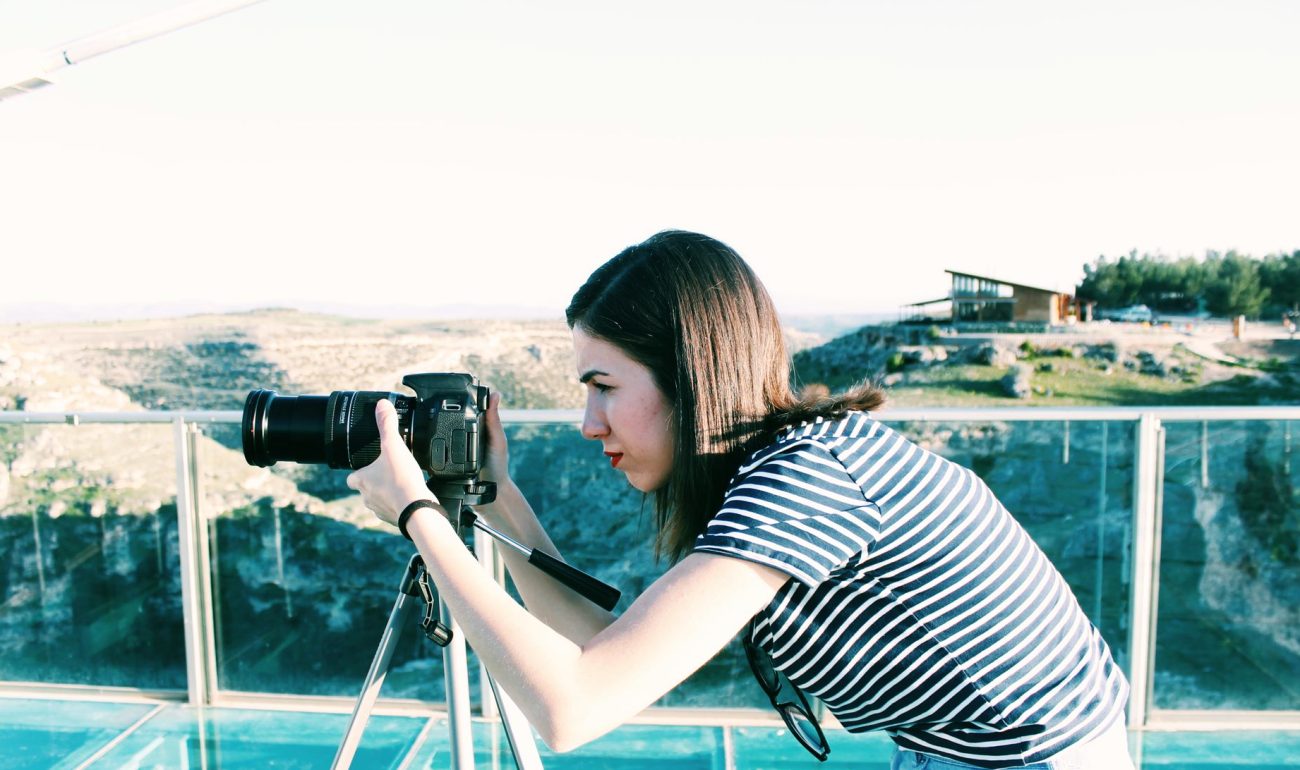
Aisha arrived on a wet Tuesday with a folder of scripts and a recording of her last three pieces to camera. She had been working for a small online news outlet, filming her own standups on a phone, and she wanted to move towards broadcast. Before we watched anything, she said the same thing many reporters say: on camera I stop sounding like myself.
I am a camera instructor, not a voice coach, but I sit in on the on-camera sessions because framing and delivery are tied together. Watching her recordings, I saw what she meant. Away from the lens she was quick, warm and a little dry. In front of it her pitch rose, her sentences ran long and she delivered every line at the same pace, as if reading from a card she could not see.
What we noticed in the first session
Helen Marsden, our lead tutor for on-camera skills, began by asking Aisha to tell her the story of the piece without the script, across a table, with the camera off. It took her under a minute and it was clear, ordered and conversational. Then she was asked to do it again to the lens, and the difference came back at once.
We filmed three takes and played them in silence first. With the sound down, the problems were visible: shoulders lifted towards her ears, weight pushed onto her toes, eyes flicking to a spot just left of the lens before each sentence. With the sound up, the long, comma-heavy lines left her no place to breathe, so she hurried the endings.
None of this was a failing of talent. It was habit, built up from filming herself alone with nobody to talk to.
- Shoulders raised and held through each line
- Eyes leaving the lens between sentences
- Long sentences with no natural pause
- Even pace from the first word to the last
Writing for the ear, not the page
The first change was to the script rather than to Aisha. She wrote the way many print-trained reporters do, with subordinate clauses stacked before the verb arrived. Helen had her read a paragraph aloud and mark every place she ran short of breath, then rewrite each marked sentence as two.
Lines got shorter. The key fact moved to the front of each sentence and the detail followed. Numbers were rounded to something a listener could hold. A phrase such as in the region of became about, and a sentence that needed a reread on paper was cut, because a viewer cannot reread.
By the end of the hour her opening line had gone from thirty-one words to fourteen. She read it twice and said it felt almost too plain. Played back, it sounded like her.
Posture, breath and the spot behind the lens
Delivery came next. We stood her with her feet apart, weight slightly back on the heels and arms loose, and asked her to let her shoulders drop before she started each take. A reporter who is braced for the first word usually sounds braced throughout it.
For the eyes, I set a small mark just above the lens and told her to think of one particular person there, a friend who had asked what happened that day. She was to finish her sentence to that person before looking away, never mid-thought. The glances to the side stopped within a few takes.
Breath was handled with the script marks from earlier: a short in-breath at each full stop, not a gasp, and a pause that she was allowed to keep. Pauses feel long to the speaker and almost invisible to the viewer.
- Feet apart, weight back, shoulders dropped before the first word
- One imagined listener placed just above the lens
- Finish the sentence to the lens before looking away
- Breathe at the full stop and let the pause stand
The second and third weeks
Aisha came back for further sessions over the following weeks, and the work moved outdoors. A piece to camera on a quiet classroom wall is one thing; the same piece beside a road, with wind in the microphone and a passer-by stopping to look, is another. We practised on the pavement outside the building, with her reading from memory rather than from paper, because reading aloud from a page pulls the eyes down.
She learned to deliver a line, hold the last word and wait for me to cue the stop, which meant she was no longer dropping her voice early to signal she had finished. Each take was watched back together, with one thing to fix and no more. Three corrections at once tends to produce none of them.
What changed, and what did not
By her last session Aisha's pieces to camera ran steadier and plainer. Her voice sat lower, her sentences ended where she meant them to, and her eyes stayed with the lens. The dry humour that she had been scrubbing out of her delivery came back in small doses, which is where it belonged.
Not everything was solved. She still tightens when a camera operator she does not know is behind the lens, and she still rushes the last line of a long piece. Those are things she now knows to look for, and she has a short routine for each.
I have not seen her next job, and I would not promise a reporter any particular outcome. What I can say is that she left sounding like the person who walked in, only more at ease with the lens.
Aisha's case is a modest one, which is why it is useful. Her delivery improved through shorter sentences, a settled stance, one imagined listener and a pause she learned to trust, nothing more dramatic than that. If your own pieces to camera sound unlike you, record yourself telling the story across a table first, then compare. The gap between the two is usually where the coaching begins.
Ask for a quote
Write to us: hello@elupho.com